 Ashok Bansal
Indian rummy
Indian rummy starts with thirteen cards. Your aim is to arrange all thirteen into valid groups before making a declaration.
On this page
What a completed hand looks like
Indian rummy gives each player a private collection of thirteen cards to organise. During the deal you exchange one card at a time. The object is to reach an arrangement where every card belongs to an acceptable combination. Among the combinations there must be two sequences, and one must be natural. It helps to see an ending before learning the opening. Put down three consecutive hearts, four consecutive diamonds, three matching kings of different suits and three matching fives of different suits. Count across those four piles. You can identify a role for each of the thirteen cards.
Now take the middle heart away and put an unrelated club in its place. You have exactly as many cards and just as many piles. What you have lost is a working sequence. This is why a declaration is checked by examining the combinations rather than counting piles or admiring the neatness of the layout. A player can look very close to finishing while still needing precisely the right missing card.
Lay out the two piles
Keep the stock within everybody's reach and give the discards a separate space. For a teaching deal you can play with two people and leave enough room to spread a finished hand between you. Agree which cards are wild before anyone sorts their holding. If using a turned indicator, put it where a sleeve cannot cover it. A newcomer who has forgotten the wild rank should be able to check it without asking a question that gives away their next move.
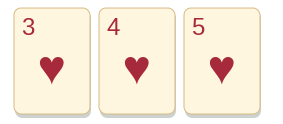
Deal cards face down around the table until each player has thirteen. Keep the remainder face down and expose the starting discard according to your agreed rules. Look at three, four and five of hearts in an imaginary opening hand. They form a useful group straight away. Put a little space between those three and your other cards. You can revisit that decision later, but for the moment you have accounted for an important part of the hand before reaching for either pile.
Sort by what is ready now
Read your opening holding in three passes. First pick out combinations you could show as they stand. Next identify cards that need one neighbour. Finally examine the singletons that have no obvious partner. Those categories describe the present deal. They can change as soon as you draw. A lone king is a potential discard now but could become the third member of a set if you discover two other kings stuck together in the back of your hand.
Try a small example using six clubs, seven clubs, a jack of hearts and a jack of spades. The clubs can improve at either end. The jacks need another jack with an appropriate suit. Nothing among these four cards is a finished group yet. Say what you actually have, rather than saying you have a run and three jacks. Planning with imaginary completed groups is an easy way to throw away a natural card you will miss two turns later.
Decide whether the exposed card helps
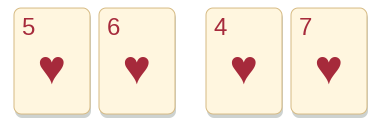
The discard is the one draw whose identity you know before taking it. Imagine holding the five and six of hearts while a seven of hearts lies face up. You can take it with a specific purpose. It makes a natural sequence immediately. An exposed four of hearts would do the same job from the other end. That is what players mean when they talk about a pair with two open ends. If the face-up card were a four of diamonds, the rank would fit your plan but the suit would fail it.
The stock offers a different kind of choice. You cannot inspect its top card and put it back if it proves inconvenient. Decide whether the known discard improves your hand enough to take it, then commit to a pile. Once you draw, look at your entire holding again before choosing a discard. It is perfectly possible for the new card to change the best grouping of cards you already held. Give yourself enough table space to see the alternative arrangement.
Finish the turn with thirteen
Count fourteen cards immediately after the draw and thirteen once the discard has left your hand. This simple routine catches an astonishingly ordinary error: a player lays a card face up to test a group, gets distracted and then mistakes that card for the one they discarded. Keep tentative groups on your side of the table and use a distinct central pile for actual discards. On a crowded table even a few centimetres of separation help.
Suppose you draw a queen while holding two queens and an isolated ten. Put all three queens together first. Has that freed a card from another group, or were both queens loose? If they were both loose and the ten has no partner, the ten is a reasonable discard. If one queen occupied the middle of your only pure sequence, removing her has done more than create a set. Lay the original run down again before deciding which arrangement to keep.
Decide what can wait
Give priority to a draw that solves a known problem. A natural run can establish a requirement the hand must eventually meet. Completing a fourth set while having no sequence at all can leave you with lovely piles and a long wait. Count how many runs you would have after the draw and which of those would remain pure. Then count the unassigned cards. Both numbers are more informative than the total number of groups sitting on your table.
Trade-offs sometimes have no single obvious answer. A high loose card might add penalty points if another player finishes soon. A low card might still have no way to join anything. Write down your reason for the discard in terms of the actual neighbours in this particular hand. If your reason would be identical for any king or any three, take another look at the suits. The objective of a practice deal is a decision you can explain, even if the next draw happens to be unlucky.
Put the printed joker to work
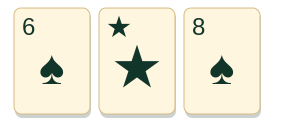
A printed joker can fill a named vacancy in a sequence that permits substitution. Set the six and eight of spades on the table and put the joker between them. Call it the seven of spades for this arrangement. You have made a sequence, but you still need a separate pure run for an Indian declaration. If somebody hands you the natural seven later, replacing the joker can free it for a more difficult gap elsewhere.
Do the test in reverse before declaring. Lift the joker out and describe the card that would have to be printed in its place. If your explanation changes suit halfway through the group, you have assigned it an impossible job. One substitute cannot simultaneously change a diamond into a heart and supply a missing rank. Keep actual wild-rank rules clear too. A printed joker is unmistakable; an ordinary numbered card that happens to be wild for this deal is easier to overlook.
Check with a second player
A fair declaration check starts with all the groups visible. Let the declaring player show their pure sequence first and identify the other qualifying run. Then inspect the remaining cards in their chosen arrangement. Resist the temptation to move a card between two groups on their behalf before counting what is there. Two players can otherwise finish arguing about entirely different layouts, each remembering a different position for the same eight.
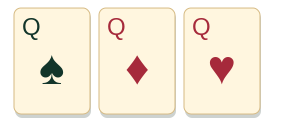
Look more closely at matching ranks when playing with multiple packs. Three queens can look alike from a distance. If two are both spades, the suits do not form a natural three-suit set. Separate the corners until each symbol is visible. A pair of duplicate spades may be useful in different groups; having both in the deck does not turn them into different suits. When you agree the layout is valid, leave it in place until the other players have finished checking their scores.
A last check before shuffling
Ask a new player to reconstruct one decision from the deal before gathering the cards. They might point to three queens and tell you exactly when they found the missing suit. Or they might remember that an early discard broke up an open pair. Choose one specific moment. Rebuilding all thirteen cards from memory is unnecessary and can turn a friendly learning exercise into a test of recall.
One helpful question is what would have happened if the final draw had been the same rank in the other red suit. Sometimes the draw would have worked equally well for a set. Sometimes it would have left a run unfinished. Look at the effect on the entire declaration, then shuffle. The pattern you have just compared is something you can recognise next time even though every actual card is dealt to a different position.
Try the last discard on paper
Test a possible declaration by leaving the final discard outside the group layout. Start with 3♥ 4♥ 5♥, 7♣ 8♣ 9♣ 10♣, Q♠ Q♦ Q♥ and 2♣ 2♦. A king of spades brings the hand to thirteen. The first two groups are ready and the queens form a set, but the pair of twos is still waiting. Count the king by himself. His value or appearance cannot turn that pair into three of a kind.
Now imagine drawing the two of hearts. With fourteen cards in front of you, place it beside the other twos and slide the king to the discard pile. Count again: three hearts, four clubs, three queens and three twos. Every group can be named without borrowing a card from its neighbour. If someone asks what your last draw achieved, point to the little set of twos. It supplied exactly the card your previous arrangement lacked.
Try a teaching deal with three people
A third seat changes how much you can infer from a face-up card. With two players, a card you discard is offered directly to the same opponent every time. At a larger table, it is the next player who has the immediate choice. The others may see the card but never get the chance to collect it. If somebody asks to reach into yesterday's discards for a useful six, stop and agree on the version being played. This Indian example uses the top available discard.
For a first shared lesson, have the third person watch a complete turn from the side before taking a seat. Ask them to say when the hand has thirteen, when it has fourteen and when somebody else may draw. The observer watches the rhythm while the seated learner concentrates on deciding where the cards belong. Change roles after a few turns. By the time you play a full deal, everyone has already practised both the little physical routine of drawing and discarding and the slower job of checking an entire declaration.
At the end of that lesson, deal the same starting thirteen to the person who was watching. Keep the first exposed discard the same, but shuffle the stock. The initial choice is now familiar and the later draws are genuinely unseen. Compare where the two players part company. They may agree on their first pure run and still prefer different discards. The disagreement is worth discussing while each can point to the exact group they hoped to complete.
Questions at the table
How do you play rummy?
Draw one card from the closed pile or take the top discard. You now have fourteen. Discard one and keep thirteen. Before declaring, check every group. You need at least two sequences, including one pure sequence.
What does a valid 13-card hand look like?
Try 3♥ 4♥ 5♥, 7♣ 8♣ 9♣ 10♣, Q♠ Q♦ Q♥ and 2♣ 2♦ 2♠. The first two groups are pure sequences. The last two are sets. Together the groups use every card exactly once.
Which card should I discard?
Suppose you hold 5♥ 6♥ and an isolated queen. A 4♥ or 7♥ could extend the hearts. If the queen has no neighbour or matching rank, discarding it can preserve both ways of finishing the run.
What is the difference between stock and discard?
The stock is face down. The discard pile is face up, so you can see the card that taking its top card would add to your hand.
Must every sequence contain exactly three cards?
No. A sequence can extend beyond three consecutive cards in the same suit.
Can I declare with one unmatched card?
After the final discard every remaining card must belong to a valid group. A single leftover card prevents a valid declaration.