 Ashok Bansal
Gin rummy
Gin rummy is a two-player game with ten cards per player. Group your cards into melds and reduce the value left over as deadwood.
On this page
Set out a game for two
Gin is played with two separate ten-card hands and a common stock and discard pile. Take the jokers out of an ordinary pack for this version. Each player aims to group cards into melds and keep the total value of unmatched cards small. Those unmatched cards are called deadwood. It is quite possible to have more deadwood cards than your opponent and still have fewer deadwood points. A single exposed queen in your final layout illustrates the reason rather well.
Before dealing, agree a match target and write the scoring convention at the top of the sheet. This matters most when a knock is beaten or somebody goes gin, because the bonuses used at different tables can differ. For a first evening, you can also play a single deal and discuss the score without committing to a full match. The useful part for a learner is following the reckoning on two real hands while the cards are still face up.
Decide who takes the upcard
The first upcard gives both players a decision before the normal rhythm of turns begins. Under the common opening procedure, the non-dealer has the first chance to take it. A pass gives the dealer a chance. If neither player accepts it, the non-dealer begins by taking from the stock. Make the two passes explicit at a teaching table. Otherwise one player may think the deal has already moved to ordinary draw and discard while the other still thinks the opening offer is on the table.
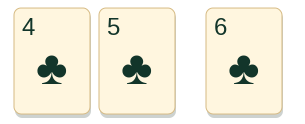
Imagine the exposed card is six of clubs and you hold four and five of clubs. You can identify an immediate three-card meld. Hand the same upcard to somebody holding four of diamonds and five of spades and the numerical neighbours do very little for them. A player accepting a card reveals one piece of information about their interests. You can observe the choice without assuming you know the other nine or ten cards they are holding.
Count the leftovers in a useful order
To count deadwood, first select the legal meld arrangement you want to show. Put qualifying groups aside and spread the remaining cards face up. Number cards use their ranks, picture cards count ten and an ace counts one. If you leave a seven, a two and a jack, write down seven plus two plus ten. Nineteen is the total you are trying to improve, even if the jack looks more attractive than either little card.
Sometimes a rearrangement helps before you draw anything. Try writing the ranks in suit columns and matching ranks across columns with a pencil. A five can be important both down its suit and across a row of fives. Give it to the run first, count what remains and then give it to the set. When both layouts contain the same physical cards, the smaller of the two legal leftover counts is the meaningful comparison. A longer-looking run does not automatically give a better result.
Understand a modest knock
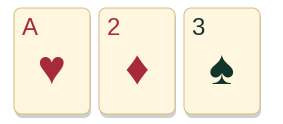
Under the ordinary ten-point limit, a hand with no more than ten deadwood points after the discard may knock. Suppose you have an ace of hearts, two of diamonds and three of spades outside all your melds. The little cards sum to six. If the seven other cards are legitimately grouped, that six gives you permission to consider a knock. It gives you no guarantee about which player will receive points after the opponent has laid out their hand.
Try the decision with everything face up for the first practice deal. Let the player considering a knock inspect the opponent's loose cards. The outcome may then be clear. For a second deal keep those cards private until the knock. The rule for six deadwood is identical, but the decision feels different because of the information you no longer possess. That difference is part of the game and a good reason to play through the ending slowly the first time.
Lay cards off against a knock
After an ordinary knock the defending player looks for ways to attach eligible loose cards to the knocker's displayed melds. If the knocker exposes six, seven and eight of diamonds, the defender's nine of diamonds can extend the upper end. The same nine in hearts cannot. A lower diamond five may also fit at the other end if it is available. Work outward from the ranks actually on the table. You cannot fill a gap by describing an absent card that somebody might still have in the stock.
The defender first deserves a chance to arrange their own melds sensibly. Then lay off the permitted cards and count the remainder. It is easy to miscount when somebody has already written down an early total. Record the final figure only after both players can point to every card that has moved. A knock that looked comfortable before the layoff can become a close contest once two useful neighbours have left the defender's loose pile.
Record a score you can audit
Compare the two final deadwood counts after an ordinary knock. If the knocker is lower, the usual award is the difference. For example, seven against fifteen leaves eight points. Write both original counts in the margin before writing the award. If a disagreement comes up later you will know whether it concerns a meld, a layoff or a simple subtraction. A lone eight in the winner's column offers much less information.
A defender who equals or beats the knocker under the agreed convention can earn an undercut. Use the bonus you agreed before the deal. With a ten-point undercut bonus, a defender finishing on four against a knocker's seven gets the three-point difference plus ten. Neither player has to know which convention a different club uses to settle that calculation. Both simply have to use the convention written on their own sheet.
Recognise a gin ending
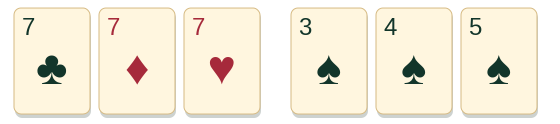
A player goes gin by completing enough melds to cover the ten cards kept after the final discard. For instance, three sevens can make one meld, three consecutive spades another and a four-card heart run the last. Once those groups are valid, there is no loose ace hiding behind the last row and the discard is actually out of the hand, the player can show gin. A pile of eleven apparently matched cards is still waiting for its final discard.
The opponent may organise their own melds but does not lay spare cards off against a gin hand in ordinary gin. That is a significant difference from a knock with low deadwood. Suppose the opponent has a card that would extend your spades perfectly. It might have reduced their deadwood following a knock. It stays their responsibility after gin. Keep the gin bonus and the opponent's counted deadwood as separate entries before adding them together.
Know when the pack is nearly empty
Before a close hand reaches the bottom of the stock, check which stock-exhaustion rule you agreed to play. A common gin convention ends the deal without a score when the stock reaches two cards and the drawing player has discarded without knocking. Resist changing the rule simply because one player can describe the card they desperately wanted next. Agreeing in advance avoids asking the player with the strongest unfinished holding to vote on whether it counts.
An abandoned deal still makes a fine teaching position. Ask each player to show one choice they faced near the end. Was the last discard chosen because of its deadwood value, because it broke an unlikely pair, or because the opponent had shown interest in its neighbour? Knowing the outcome afterwards can tempt you to treat every choice as obvious. Return to the actual information visible before the draw and judge the explanation on that basis.
Choose between two deadwood arrangements
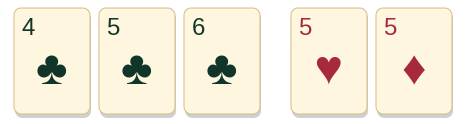
The best layout in gin is the one that leaves the smallest legal deadwood total for the cards actually present. Try the ten-card hand 4♣ 5♣ 6♣, 5♥ 5♦, 8♠ 9♠ 10♠, A♥ and 2♦. The five of clubs is the contested card. Put it with the four and six of clubs first. The spades make a second run. That leaves the two other fives, the ace and the two loose, worth thirteen points altogether under ordinary gin values.
Move the five of clubs from the run to the set of fives. Now the four and six of clubs are loose beside the ace and two. Add them and the total is still thirteen. Two different groupings can give the very same result. Neither layout is within a standard ten-point knocking limit. Seeing three matching fives does not by itself bring this particular hand any closer to a knock.
Suppose the next upcard is the three of clubs. Take it and imagine discarding the five of diamonds. You can now put down three, four, five and six of clubs plus the three spades. The five of hearts, ace and two remain, worth eight. You have crossed the ordinary knocking threshold, although you have not reached gin. If the upcard had been the three of diamonds instead, you could not have made that four-card club run. Check the suit before counting the improvement.
Teach a knock with open hands
Play the last turn face up the first time you teach someone to knock. The learner names the discard, then shows the two piles of melds and deadwood. The other player gets to ask what would happen if a single card moved between piles. That last question often uncovers a better arrangement before anyone writes down the score.
Repeat with the same cards once each person understands the arithmetic. Cover the opponent’s hand and ask the learner whether they would still knock. This time the decision includes uncertainty about the opponent's cards. The numerical value of your own deadwood stayed the same. The information you could use to decide whether to finish changed.
Keep track of a return card
A card taken from the open pile tells your opponent something a draw from the stock keeps private. Suppose your opponent accepts the eight of clubs and throws a red picture card. Perhaps they needed an eight to make a set. Perhaps the eight extended a club run. Keep both possibilities in mind. Observing a move gives you evidence, but one draw seldom tells you enough to reconstruct another person's entire hand.
Now imagine that you hold a seven of clubs and a seven of diamonds with otherwise equal uses. If you must release one, the club might be the more convenient neighbour for the opponent you just observed. Compare that consideration with your own deadwood and meld prospects. Holding on to an expensive, disconnected card forever simply to deny a possible run can damage your own position. After the hand has ended you can compare your interpretation with the real melds. A wrong guess can still have been a sensible choice on the information you had when discarding.
For a final exercise, keep a short log of one face-up card accepted by each player. After the deal, reveal only the meld that eventually used it. Sometimes the card will have moved from its intended run into a set as the hand developed. That is a reminder that the information in an early draw can grow stale. The opponent who wanted your seven several turns ago might have found a quite different way to finish by the time you discard it.
Questions at the table
How do you play gin rummy?
Draw a card and discard one. Keep runs such as 4♣ 5♣ 6♣ and groups such as three kings. Unlike Indian rummy, gin does not require a pure sequence to finish.
What does knocking mean?
In standard gin, you may end a hand after discarding when your deadwood totals ten points or less. The opponent exposes melds and may lay off eligible cards against yours.
What is the difference between knock and gin?
A player going gin has zero deadwood after the discard. For example, three melds of sizes three, three and four cover all ten cards. An opponent cannot lay off on a gin hand.
How many cards are in a gin rummy hand?
Each player starts with ten. Draw one and discard one each turn.
How much is an ace worth in deadwood?
An unmatched ace counts one point in standard gin scoring.
Can I lay cards off when my opponent goes gin?
Ordinary gin does not allow the defender to lay off on a gin hand.