 Ashok Bansal
Free rummy practice
Choose a drill, tap three cards, then check your group. New hand deals the next puzzle in the same category.
Find the pure sequence
·On this page
Choose cards on the felt
Each puzzle deals a small rack and asks a question above it. Read that question before touching a card. A three-card answer for the set puzzle would be completely wrong in the sequence puzzle, even if you selected it confidently. Start by naming the card you are sure belongs in the answer. Select it, compare the other five, and add two companions. The check button becomes available once the rack has your complete choice.
Notice what the screen does when you change your mind. Try selecting a fourth card while three are raised. The table asks you to release one first. Touch the unwanted selection a second time, watch the count change and then pick its replacement. You can do this before checking. A keyboard player can use the same controls by focusing each card and activating it as a button.
Learn the three questions
A natural run poses a question about order. Take the seven and eight of hearts. Which card would extend them on the right? A nine of hearts works because it continues both their suit and their rank order. The Set button changes the question to identity of rank. If your starting card is a nine of clubs, you can now consider a diamond nine or a heart nine even though neither could follow that club in a run.
The third drill gives a printed star a particular role. First decide which two natural cards could sit in the same short run. Now imagine the absent neighbour on an ordinary playing card, including its suit. Choose the star only when you know what you want written on that imaginary card.
Read the result and deal again
The answer line describes the selection you submitted. Compare the named suits with the ones you thought you saw. A mistaken diamond can tell you something about the way you scanned the rack. Try again on that very deal while the distinction is fresh. When you have solved it, use New hand to move forwards. Within each drill you will eventually see the first rack again, which gives you a chance to recognise it without relying on the order of your previous taps.
Follow the hearts through the first deal
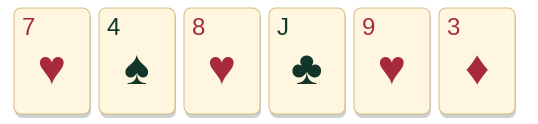
The first pure run is the seven, eight and nine of hearts. Try finding it once by rank and once by suit. On the first pass, read each corner in turn: seven, four, eight, jack, nine, three. The seven and eight have a neighbour in the nine. Before tapping, look at the suit beneath each rank. All three have the heart shape. The jack sits between two of them on the screen, but where a card is dealt on the rack has no bearing on its place in a sequence.
On the second pass, ignore the numbers until you have found all the hearts. Then put their ranks in order in your head. This is a useful habit when two red suits appear together. The three of diamonds looks much like a heart at a glance, yet it cannot continue a heart run. If you select it by accident, tap it again. You can correct the selection before submitting or after a failed check; neither costs you the hand.
Work out which end takes the ace
In the second pure-sequence hand, the queen, king and ace of spades belong together. The king of hearts is a deliberate distraction. Read the two kings with their complete names before making a selection. Move the heart king into your imagined run and the ranks stay perfect, but the colour changes in the middle and the group fails. Move the spade king back and the queen has a natural neighbour on both sides of the join.
On the next hand the ace moves to the other end. Select ace, two and three of diamonds. Lay those ranks out on paper beside the previous queen, king and ace. In the first example the ace is above the king. In the second it sits below the two. There is no third arrangement in which an ace acts as a bridge from a king to a two. If you can explain the difference without looking at the suit, add the suit back into your explanation and check the cards.
The fourth pure-sequence hand tests a different reading habit. Nine, ten and jack of clubs belong together even though the last card has a letter in the corner. Say “nine, ten, jack” aloud. A ten still occupies a single rank despite the two printed digits, and a jack is its immediate successor. The five of spades and king of diamonds can stay where they are. After you check, New hand returns to the opening hearts so you can compare the number run with this face-card ending.
Find a set when the suits disagree
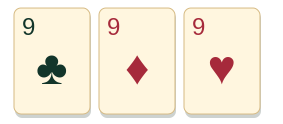
The first set consists of three nines, one each in clubs, diamonds and hearts. If you have just completed the sequence drill, the different suits may look like a reason to reject them. Here the change of suit is exactly what you need. Start with the nine of clubs. Look across the rest of the rack for another nine, then a third, naming a different suit on each tap. Leave the two of hearts alone even though it shares a suit with one selected card.
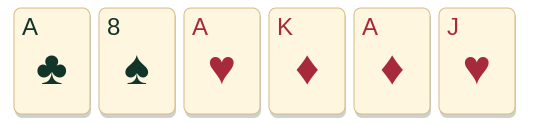
The next deal is a good test of the ace habit you built earlier. You have three aces. You do not have to decide whether the ace is high or low, because a set has no first or last rank. Try selecting the diamond ace first on one attempt and the club ace first on the next. The order of selection can change the order in which you say the names, but it cannot change the group the three cards make.
In the third set hand the fives appear at the beginning, near the middle and at the far end of the rack. A useful physical trick is to point to the first five while scanning for the last one. On a small display, let the selected state do that job for you. Once a card is raised, you can read the remaining cards at your own pace. There is no need to memorise six positions and tap them in rapid succession.
The last set is made of queens. One king is close enough in rank to suggest a run, and the queen of hearts looks particularly at home next to him. Ask which question the table actually posed. A pair of consecutive ranks in hearts does not complete a three-card set. Match the queen of clubs, the queen of hearts and the queen of spades. The surface changes from numbers to pictures; the test stays exactly the same.
Give the joker a name before you check
In the first joker puzzle the six and eight of spades leave a gap for the seven of spades. Choose those two natural cards and the printed joker. Before checking, say “seven of spades” instead of “joker”. If the three spoken names now make a normal consecutive run, you have found a job the joker can perform. Naming the absent card catches errors that are easy to miss when a star looks like a universal spare part.
The second rack asks the same question lower down the pack. Three and five of clubs can be joined by the four of clubs. The two of spades appears inviting because two and three are neighbours. If you choose it with the three of clubs, no single card can repair their difference in suit. The joker may supply a missing rank, but the two natural cards must still agree with each other. This is a useful mistake to make once in the trainer before attempting a full hand.
On the third rack look for the queen and ace of hearts. They may appear unrelated if you imagine the ace only as the smallest card. Say the final three ranks in order: queen, king, ace. The star supplies the king of hearts. The other natural cards on the rack have no place in that group. Try explaining why the two of diamonds cannot turn the ace back into a low card here. You would need a matching suit and a different run altogether.
The final joker hand has a trap in its two low red cards. The three is a heart and the five is a diamond. Although a four would fill the numerical gap, its suit could never match both neighbours. Look instead at the ten and queen of clubs. Imagine the jack of clubs between them, then select the printed joker along with those two clubs. When you check the group, explain why solving the gap in the red cards first would still have left another fault to fix.
Build a puzzle for someone else
To make a puzzle of your own, lay a known group face up and mix in three other cards. Begin with four, five and six of clubs. Add a four of hearts, a nine of diamonds and a king of spades. Ask someone else to pick a pure sequence. If they choose the heart four at first, let them keep the five and six on the table. One change of suit fixes the whole answer. Repairing the group is a more precise exercise than simply starting again with six unsorted cards.
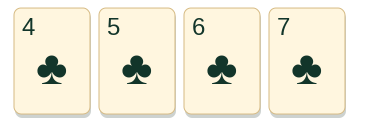
Now design a rack with two correct answers. Deal four, five, six and seven of clubs and add two unrelated cards. The four through six is valid, and so is the five through seven. Have one player find the lower run and another player find the higher run. Ask whether both groups could appear separately in a declaration. They share two physical cards, so you can choose one of those three-card arrangements or keep all four clubs as one longer sequence.
Finally, deal a puzzle with no solution and say so before your partner starts. Give them three hearts separated by wide gaps and three different singleton suits. Instead of choosing three cards, ask them to name one change that would make the puzzle solvable. This time they have to describe the missing card as well as recognise the ones on the table. When you return to the browser drills, you can use that same question to explain exactly why a near miss failed.
Carry a lesson into your next deal
When you leave the trainer, take just one decision into a full hand. For example, make the first pass through thirteen cards looking only for a pure sequence. You already know how to find a three-card run among distractions. Put the run down as one group and turn your attention to the ten remaining cards. On another evening, concentrate on which rank the joker would have to replace. Choosing a single question gives a practice session a clear ending.
If two people are watching the same hand, swap jobs for the next round. The person holding the phone selects the cards. The other person has to explain why one of the remaining three cards cannot replace a selected card. A correct answer from the checker confirms the first task. A clear explanation to your partner finishes the second.
Questions at the table
How do I practise a pure sequence?
Choose Pure sequence and look for three cards in the same suit. Sort their ranks in your head, then check whether any number is missing. Tap a selected card again to put it back.
When can I include the printed joker?
Choose Joker run. The star card can replace one missing rank. Your other two cards must be of one suit and fit into a single three-card run.
How many practice hands are there?
Each of the three drills contains four prepared hands.
How do I undo a selection?
Tap or activate a selected card again. The selection count drops by one.
Why is Check group disabled?
Select exactly three cards first. The table enables the check once the selection is complete.
What happens after hand four?
New hand returns to the opening deal for that drill. Choosing another drill starts its own set of hands.