 Ashok Bansal
About Ashok Bansal
Ashok Bansal is the name on this free rummy table for India. This independent project offers short browser exercises and worked examples in English and Hindi.
On this page
The name above the table
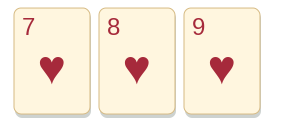
Ashok Bansal is the name of this Indian rummy club concept at ashokbansal.co. The easiest introduction is the hand on the front of the club. Three hearts sit beside the host in the yellow suit. Read their corners from left to right: seven, eight, nine. Before you have taken a seat or read a rule, you have already seen the combination that matters most in Indian rummy. All three cards belong to one suit, and the middle rank is present naturally.
If you arrived with the question “Ashok Bansal kaun hai?”, that is what the name identifies on these pages. A portrait in a banner is part of the club design. It does not establish the identity of a company director or prove that a particular person runs an online casino. We have no verified biography or relationship with Crore Bet to present. You can see what belongs to this project by opening its card table and trying the deals yourself.
There are two useful starting points. If you already know the difference between a set and a run, take the practice seat beside Get bonus. You can have three cards selected in a few seconds. If a relative has dealt you thirteen cards and you have no idea which one to pick up first, open Indian rummy. It follows an entire turn and explains why the hand has fourteen cards for a moment and thirteen again after the discard.
Reading the two buttons on the banner
Practise a hand deals a six-card exercise in your browser. Get bonus opens the external offer in the same tab. The distinction matters when you return to the page after playing: a correct hand changes the answer on the table, while the bonus panel describes a separate proposal. Finishing all the hands has no effect on that panel.
The proposed welcome offer is 500% on the first deposit plus 500 free spins. Those are two different units. The percentage describes a proposed deposit bonus; the spin count describes a number of rounds. Five hundred spins is not a balance of five hundred rupees. No deposit can be made and no spins can be claimed in this build. The panel therefore contains the terms we can state without supplying invented wagering requirements, eligible games, expiry dates or withdrawal limits.
You can recognise the same offer in the first slide and in the offer panel beside the club introduction. On the Hindi page you will find the account controls labelled in Hindi. Selecting Get bonus opens the external offer, where you can check the current terms. Register and Login lead to the same destination. Use your browser’s Back button to return to the club. The free card exercises are ready to play without either step.
What a visit to the practice table feels like
At the practice table you solve one small grouping problem at a time. Imagine taking the first seat and seeing the seven of hearts, four of spades, eight of hearts, jack of clubs, nine of hearts and three of diamonds. There is no clock counting down. You can read all six cards, put your finger on the seven and then decide whether the eight beside the jack is the one you need.
Choose the three hearts and press Check group. The message names your cards, which is useful if two of them looked alike on a small screen. If you choose the three of diamonds simply because it is red, the check leaves the same hand in place. Touch that diamond again to release it, choose the nine of hearts and check once more. This is an exercise you can repeat until you can explain the answer to another player.
Change to Set and the question changes with the deal. Now you want three ranks alike and three suits different. In Joker run the printed joker takes the place of a missing card. One way to use the club over a few short visits is to choose a different drill each time. On your first visit recognise the shape of a run. On your next, pay attention to the small suit marks on the matching ranks. On the third, name the card that the joker stands for before pressing Check group.
Choosing between Indian rummy and gin
Choose Indian rummy when you want to learn a thirteen-card declaration. Picture two neat runs on the table and four loose cards in your hand. It is tempting to announce that you have finished as soon as you see your second run. The Indian table shows what else needs checking. Every loose card still needs a place, and the same physical card cannot fill the end of one group and the middle of another.
Choose gin when two people want to play with one ordinary pack and a shorter working hand. There is a revealing difference near the end of a deal. In gin a player can sometimes knock while a few ungrouped cards remain. Their value matters. Two loose low cards can be a better ending than a single loose king. If you bring that idea straight to an Indian declaration, you will be trying to finish with cards that have no group.
Many families call both games simply “rummy”. When someone asks you to bring the cards, asking how many cards they deal is an easy way to begin the conversation. Follow up by asking what a player does to end a hand. The answers “thirteen, and show the whole hand” or “ten, and knock” tell you which part of this club will be the better fit. Agree the rest before shuffling.
Playing on a phone or sharing a screen
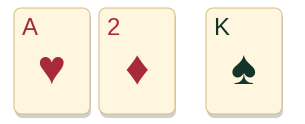
Open Practice directly in the browser if you want to play on a phone. The install strip has its own destination and can be closed with the cross. It is separate from the game. If you are showing the table to a friend, keeping the browser page open is enough for both of you to examine the same hand. You can also turn the phone sideways or enlarge the text when a rank is hard to read.
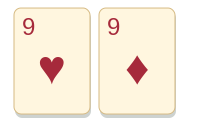
For a two-person exercise on one screen, let the first person name a group without touching the cards. Let the second person select exactly what they heard. When someone says “the red nine”, pause before tapping: a nine of hearts and a nine of diamonds would do different jobs. Ask for both the rank and the suit. This quick exchange turns a vague description into a choice that another person can reproduce.
A keyboard user can move through the controls and activate a card with the usual button keys. The selection count tells you when three cards are on the rack for checking. If you lose track of which card you just selected, listen for its selected state or look for the raised card. The answer remains on the page long enough to read. Moving on is your choice; the next hand begins when you select New hand.
Finding the same lesson in English and Hindi
The Hindi lesson teaches the draw, discard and declaration in the vocabulary used at an Indian table. It is a good place to start if “pure sequence” is a familiar sound but its meaning is still uncertain. Try reading the hearts example in Hindi, then point to the seven, eight and nine on the English home banner. The symbols do the same work in both places.
Suits are especially worth naming together. A player might know clubs as चिड़ी and spades as हुकुम, while a relative uses another family name for the same marks. Neither has to learn a new set of household words to play a hand. Match each spoken word with a printed suit before the first deal. Then describe an actual card and let the other person point to it. You will hear a misunderstanding before it costs anyone a turn.
If you share a lesson with someone, send the page that answers the question they asked. The sets and sequences page is the shortest route to an ace at the end of a run. The points page is the place for a disagreement about a score. For a beginner who wants to know why they drew a card and immediately had to give one up, send the Indian rummy page. A link to a specific explanation is easier to use than asking someone to start in the lobby and remember three more taps.
What the slot catalogue shows
The catalogue pairs each featured slot with its studio and its own cover. Sweet Bonanza is the Pragmatic Play title. Book of Dead is the Play’n GO title. Recognising a cover can help you find a name again, particularly when someone has described a game only by its sweets or its Egyptian setting. Reading the studio beside the title helps distinguish the game from another release with a similar theme.
The cards here show catalogue information. Their launch status is printed beside the studio because there is no connected slot session on this site. If you want something you can interact with now, choose the rummy table. Its results depend on the three cards you select, and the feedback explains the grouping rule. There are no reels to spin in the trainer and the answer has no cash value.
The lobby brings the rules, practice table and slot details together in a single grid. Opening Gin rummy takes you to a playable-at-home rule set for two. Opening Practice gives you a browser task. Looking at a slot card tells you the title and provider. The labels let you decide which of those experiences you want before leaving the first screen.
Returning to an unfinished question
You can return to any rules page through the links at the foot of the site. A useful bookmark is the particular explanation that made you put the cards down and check something. For example, save Sets & sequences when the disagreement is whether a king, ace and two can turn the corner. Save Rummy points when two people agree on the groups but have reached different totals for the leftovers.
For a question about an actual hand, write down the cards as well as the answer. A note saying “wrong move with a seven” will mean little tomorrow. A note saying “moved the seven of clubs from six, seven, eight into three sevens; lost my only pure run” gives you a position you can lay out again. Come back to it with the cards facing up and see whether another grouping solves both problems.
That is also a good way to finish a visit to Ashok Bansal. Leave with one position you can recognise again: a pair with two open ends, an ace at the low end of a run, or a joker whose missing rank you can name. The next time someone deals a full hand at home, you have one less decision to make from scratch.
If you want to share that position, write the rank and suit of each card in your message. A friend can then reconstruct the same choice with an ordinary pack, even if your two screens arrange the cards differently.
Questions at the table
Ashok Bansal kaun hai?
इस वेबसाइट पर अशोक बंसल कार्ड रूम का नाम है। यहाँ आप बिना पैसे लगाए रम्मी के क्रम और सेट बनाने का अभ्यास कर सकते हैं।
Is Ashok Bansal linked to Crore Bet?
This project has no verified affiliation to report. Similar names in search results do not establish ownership or endorsement.
Does the card room have deposits or withdrawals?
There is no cashier or player balance here. The practice table checks card combinations locally. The Install button uses a separate external destination.
Can I visit the card room without signing in?
Yes. Open the lobby, rules or free practice table directly.
Which activities work in the browser?
The practice table checks groups of three cards. The lobby also offers local search, rules, game descriptions and the welcome concept details.
Does the Install button start the card trainer?
Install opens the external installation destination. Choose Practise a hand to open the local trainer.